
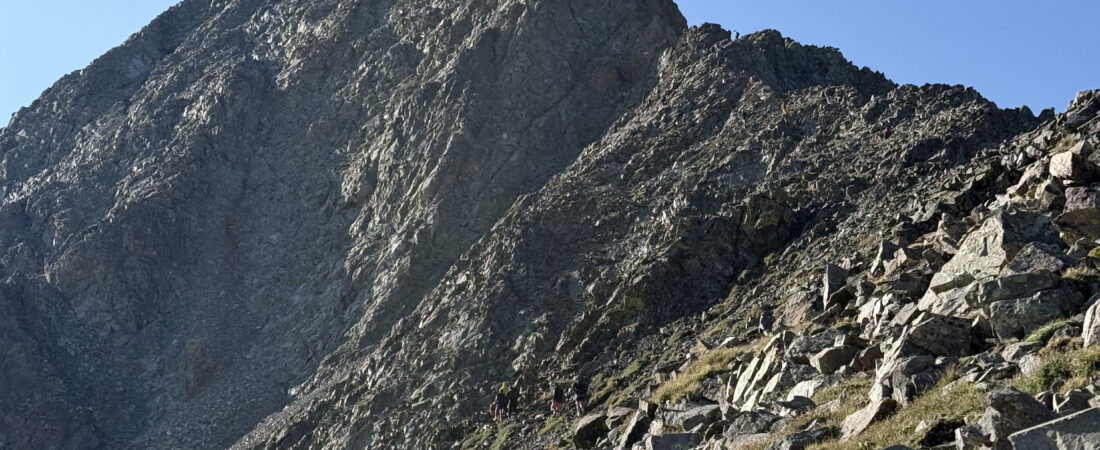
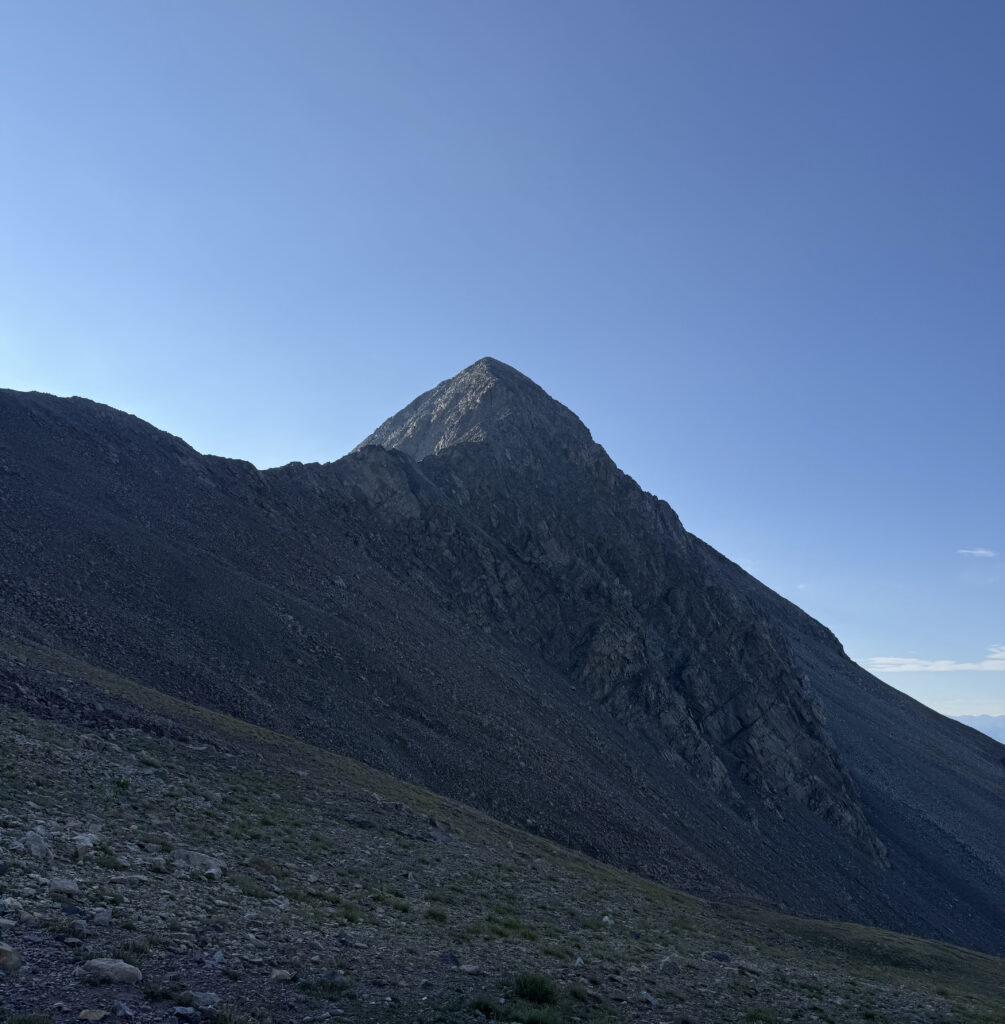
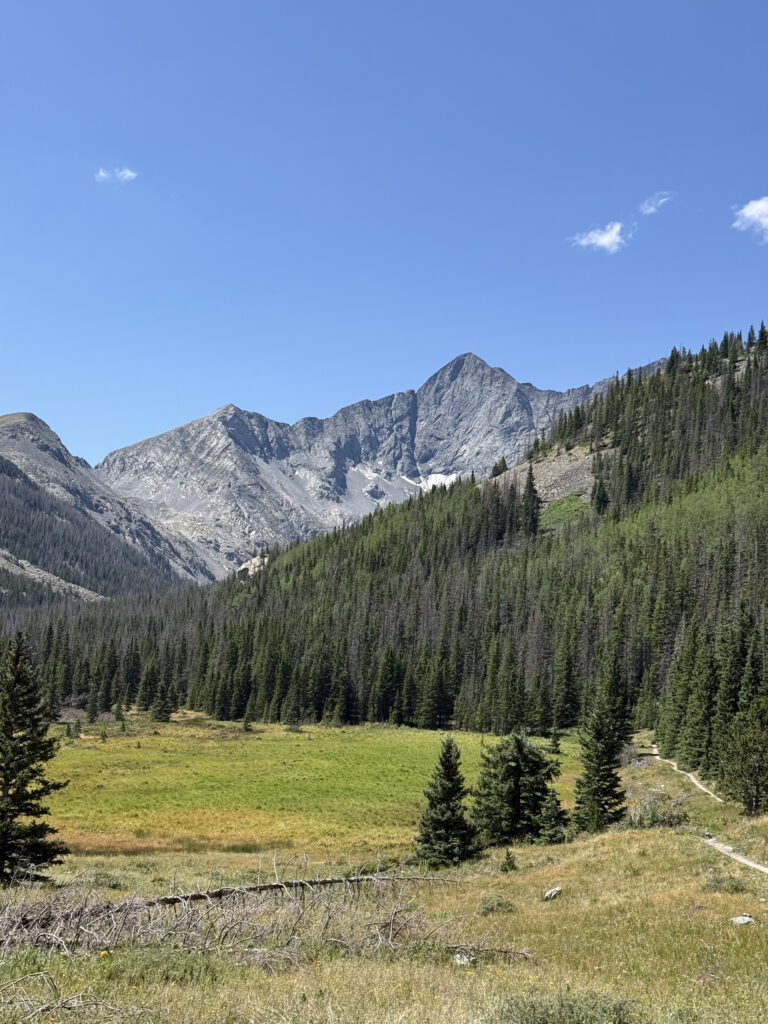
It was a perfectly sunny day. Not a storm in sight for the entirety of the final push. Yet, I still turned around. On Saturday, July 25th, I set out to climb Mt. Lindsey in the Sangre de Cristo Range in southern Colorado. In the past four years, I have successfully summited nine 14ers. These include Longs Peak, Mt. Sneffels, Mt. Yale, and more. However, Saturday brought my first summit fail.
My original plan for the weekend was to head out towards the San Juans and summit Wetterhorn Peak. However, due to fires ravaging the area and shutting down the forest, I had to adjust to Mt. Lindsey. For eight of the nine fourteeners, I was lucky enough to have acclimatized for several days. Longs Peak was done after four days in Estes Park, and then every other 14er besides Mt. Yale was done during summers working in Rifle, CO, with the Forest Service. Due to a busy schedule at home, I was forced to arrive at the Lily Lake trailhead (10,700 feet) Friday around 3:45 pm. This was just 12 hours before I ultimately decided to begin the journey towards Mt. Lindsey (14,055 feet).
The night before the climb was rough. Upon finishing dinner, a storm rolled in quicker than you’d ever think possible. This was just the beginning. The night featured intermittent rain and storms that were honestly quite frightening. Seeing the bright flash behind my closed eyelids had me ready to call it quits before I even started. I gave myself ample time to sleep. However, I really only slept for a few hours. I began my ascent early. In a summer that has grown to be wet nearly every day, it was apparent that I needed to start before showers rolled in. At around 3:45 am, I began down the trail.
Usually, I find myself hurting during the first half mile of any hike. Similar to a long-distance run, I needed time to adjust to the state of exertion I was in. However, this was different. The first two miles were flat, yet I still felt horrendous. I wanted to turn around at this point. However, I pushed on, and the incline grew. My head was pounding, my chest was hurting, and I was ready to puke. This was a very unusual feeling, one I had never experienced on any other 14er or hike in general. Around mile three, I began to feel a little better, or I just pushed through the pain better with the summit in sight.
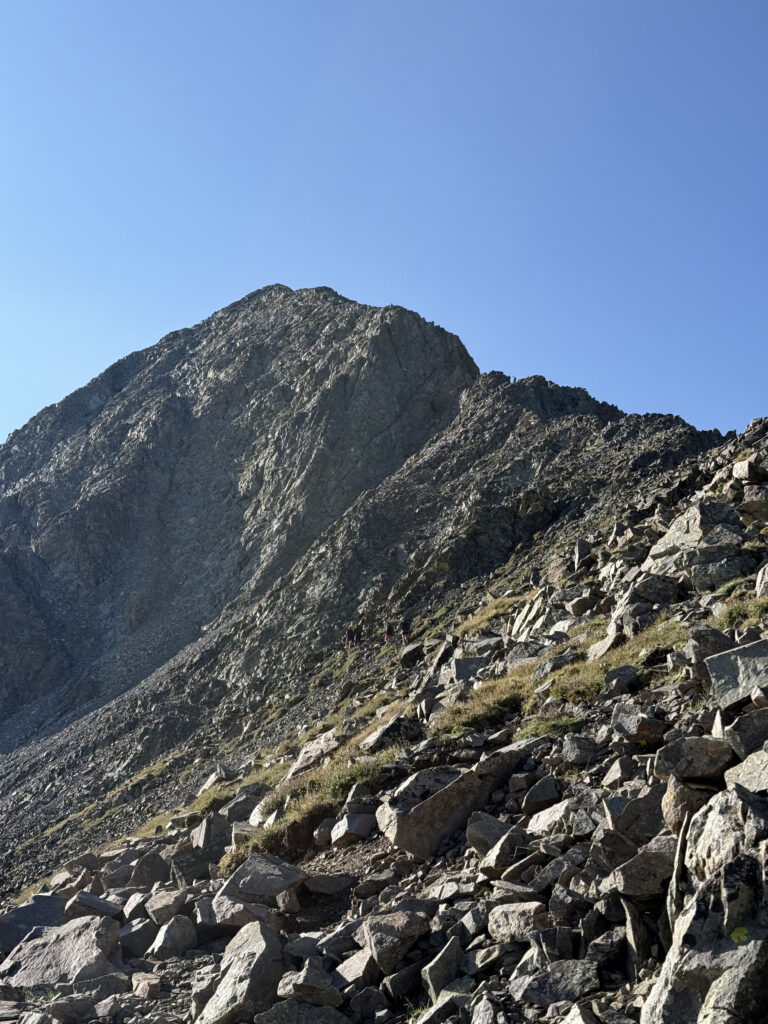
Upon clearing a 1,000-foot gain to reach 13,000 feet, I was ready to summit. Despite nearly getting cliffed out multiple times, I climbed towards the crux move in an area reminiscent of the incline I faced on Mt. Sneffels a year ago. However, just before reaching the crux move, the symptoms came back in a flurry. Sitting under what looked like a 90-degree rock wall, I paused to eat an 8 am “lunch.” Generally, lunch comes at the summit for me. However, I needed to pause before I continued.
Following lunch, I really didn’t feel much better. I stared at the wall and contemplated. I had never failed to reach a 14er summit before. Would this be a failure? How would I feel turning around 500 feet below the summit? Should I just go until I can’t anymore? These were all questions that crossed my mind before making my decision. This wasn’t an easy choice. In 2022, I passed the crux move of Longs Peak before my Dad could convince me to turn around; in 2025, a similar incident occurred near the summit of Mt. Sneffels. However, this year it was my decision. Under similar circumstances, it was my choice to push through or turn around. Ultimately, I decided to turn around and head back towards the truck.
Turning around wasn’t easy. I was essentially there. But what stood between me and the summit was a class three or four crux move that I had to make on shaky legs, a foggy brain, and a weak body. I have made moves just as hard. I conquered the Narrows on Longs Peak. I conquered the V notch on Mt. Sneffels. However, I decided to turn around. To give up. Under these circumstances, it wasn’t worth it.
So why did I turn?
Look at it like this. If you had the option to eat one M&M from a bag of 100, 5 of which would kill you, or to walk away from the bag, you’d probably choose to walk away. With odds of serious injury or death at roughly 5% under these conditions, it probably wasn’t worth it. Under the circumstances I was in (weak legs, foggy brain, tired, etc.), I chose to walk away. I probably could have summited. A younger me wouldn’t have thought twice. I’d most likely have some badass summit pictures that would already be hanging on my wall. However, I’ve grown a lot in the past few years. I understand that not only is it not worth it, but the mountain will always be there. As long as it stays accessible, I will always have the chance to summit it again. And honestly, summiting it again will only make it feel that much more special.
What lessons did I learn?
This failed summit taught me more than any successful climb I’ve ever had. For a moment, I felt invincible. Two straight years of 14ers nearly every weekend helped me to believe I could climb just about any mountain in the state. However, this was an important reminder that no 14er is easy. Each 14er brings its own unique challenges, and Saturday served as a shocking reminder of that. Beyond the large-scale lessons, I was reminded of several things I will carry with me mentally for my next summit attempt.
- You must acclimate. For easier 14ers, it is easier to get away with not getting used to the high elevation. However, for any 14ers that really require extra brain power and technicality, one night won’t do the trick. It’s hard planning around schedules if you don’t come from elevation. But it makes it that much harder if you force a summit attempt when your body simply isn’t ready. In the future, I will plan for multiple nights at elevation before attempting to summit any class three or above peaks.
- You must sleep. I was dealt a tough card with this one. The fear of dying from a lightning strike before stepping foot on the trail sounds silly, but spend one night in that lightning storm, and you’d understand. Even if it’s a solid six-hour sleep, it is important to get more than a choppy 3-4 hour nap before taking off.
- Sometimes, it just doesn’t work: I felt like I had essentially done everything in my control correctly. I was in decent shape to begin with. I ate a good dinner, tried to get a good sleep, started early, hydrated with water and electrolytes, and continued to take breaks and eat throughout the start. I didn’t even push the pace too fast. Yet, my body told me that it wasn’t the day. That will just happen some days.
- It takes time and experience: Nobody becomes an expert runner, writer, chef, etc. instantly. As with anything, hiking/climbing 14ers is a skill. The more you do it, the better you get. Having summited less than 25% of all Colorado 14ers, there’s still so much to learn. I plan to release lessons learned from each of my nine 14er summits at some point in the future. So much can be learned from each experience, and it is worth sharing my experiences, so stay tuned.
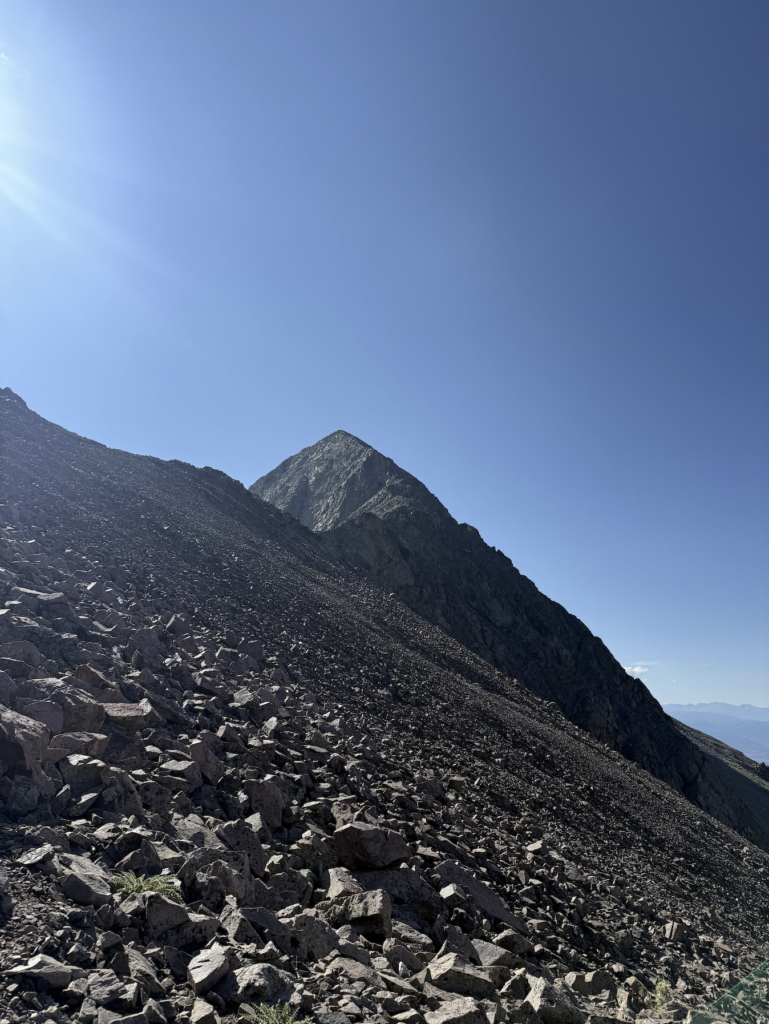
So what about Mt. Lindsey?
If you’re reading this before a Mt. Lindsey summit attempt, you probably didn’t care too much about anything else I mentioned. So this section is important for you. My first word of advice is not to cancel your plans. If you’ve done any class three or hard class two summits, you can do Mt. Lindsey. Don’t let my failure deter you; just remember the lessons I learned. Understand that when you reach 13,000 feet, you won’t understand how in the world you’re supposed to climb THAT. The view at 13,000 feet was more intimidating than any 14er I’ve done. Beyond that, understand which route you plan to take. There are two distinct routes: the Northwest Ridge or the Northwest Gully. I chose the Northwest Ridge. This route features more stable rock. With less rock falling from above and a direct path towards the summit, this way seemed more feasible. However, next time I’ll look towards the Northwest Gully route. Dodge the falling rocks, and this route seems very doable compared to the exposure you’ll face on the Northwest Ridge route. Ultimately, the choice is yours, but research beforehand and have a choice before your final ascent. Once you commit to one way, it becomes hard to switch.
Going Forward:
The journey to the 58 Colorado 14ers can be long. I hope to live a long life and summit at least one every year. Missing this opportunity hardly sets me back at all. I will only gain knowledge and fitness. Above all, the lesson I learned from this experience was that a failed summit attempt is only a failure if you let it. It was not a success; it was not a failure; rather, it was a learning experience. Each time you summit, you learn something. You grow smarter and use these lessons to become the best version of yourself possible. If you look at it as another learning experience, you’ll continue to grow. I will be back at Mt. Lindsey and plan to enjoy the journey even more next time.
Leave a Reply